Agra is known worldwide for the Taj Mahal, but beyond its marble grandeur lies another artistic treasure—its exquisite hand-knotted carpets. Since the Mughal era, Agra has been a thriving centre for carpet weaving, nurturing a craft that has stood the test of time. Even today, the city ranks among India’s major export destinations for premium handmade carpets, celebrated globally for their rich designs, intricate patterns, and impeccable craftsmanship.
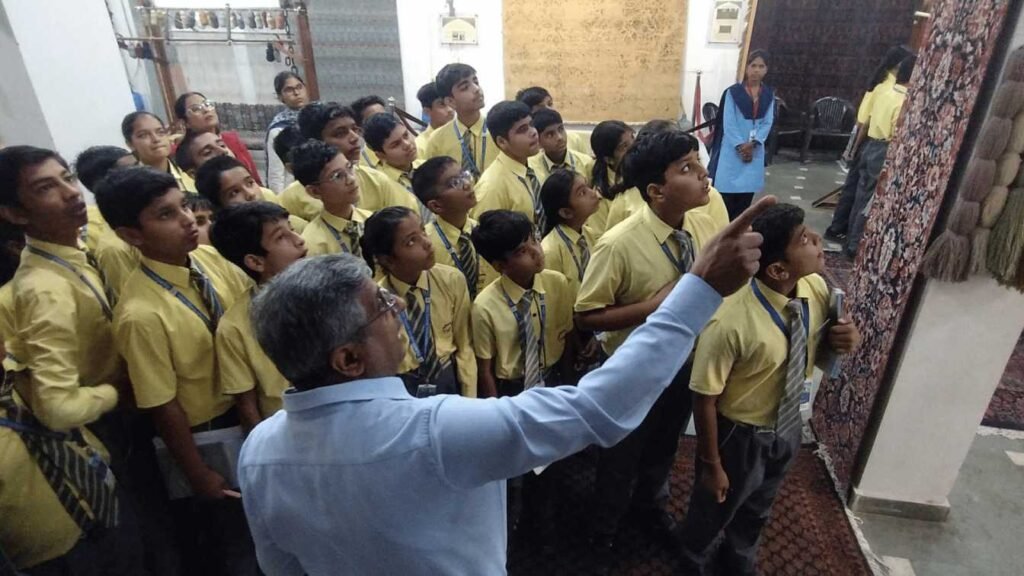
As part of The International School Agra’s experiential learning initiative, our students recently had the privilege of exploring this age-old art form up close during an educational visit to Kalra’s Cottage Industry, one of Agra’s most respected manufacturers and exporters of hand-knotted carpets. The tour immersed students in the heritage, skill, and cultural importance behind one of India’s finest traditional crafts.
The Legacy of Agra’s Hand-Knotted Carpets
A Mughal-Era Craft That Still Thrives Today
Carpet weaving in Agra flourished under Mughal patronage, especially during the reign of Emperor Akbar. The Mughals brought skilled Persian artisans to India, blending their techniques with local artistry to create carpets that became symbols of luxury and refinement. Over centuries, Agra continued to preserve these techniques, becoming home to master artisans who passed the craft down through generations.
Today, Agra’s carpets are admired worldwide for their durability, elegance, and hand-crafted precision. Designs inspired by Mughal gardens, geometric motifs, floral vines, and traditional Persian patterns make these carpets unique collector’s pieces.
Experiential Learning in Action
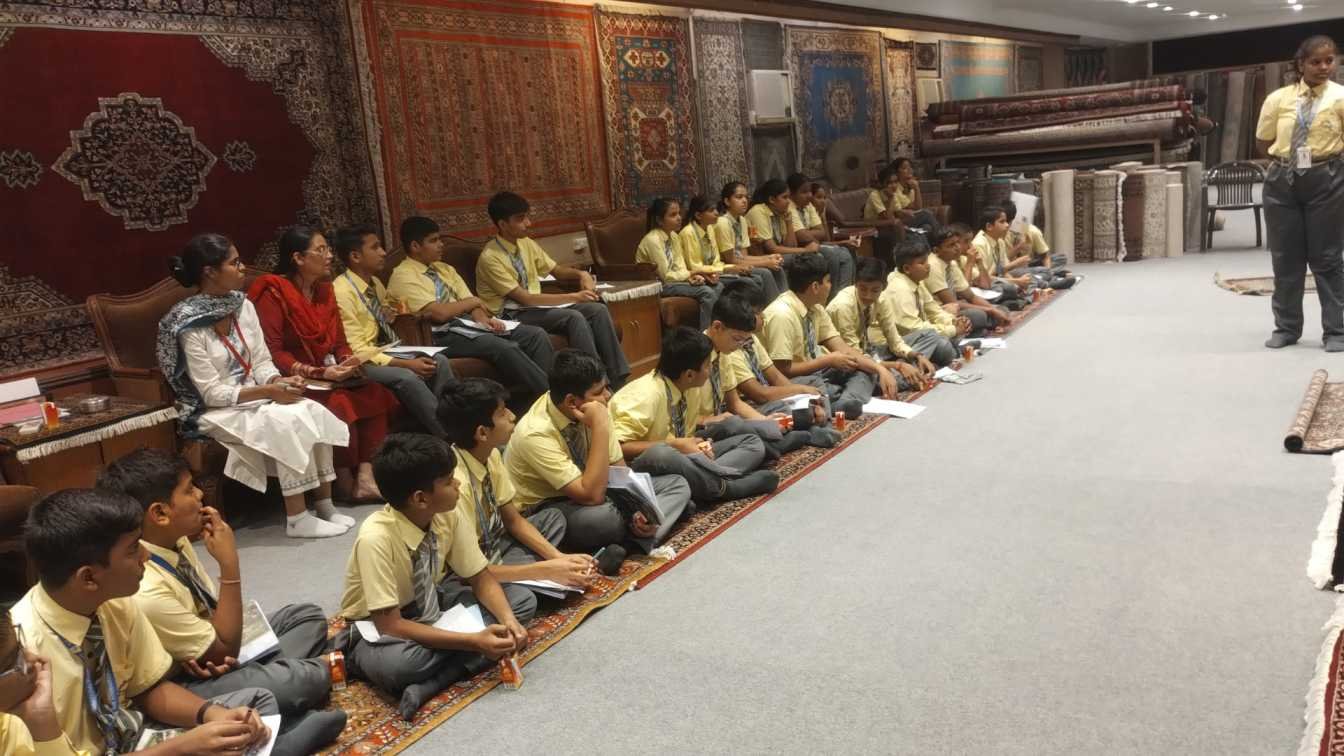
The visit began at Kalra’s Cottage Industry showroom, where students explored an impressive collection of handcrafted carpets woven using wool, silk, and cotton. Artisans and guides briefly introduced them to the history of the craft, the global demand for Agra carpets, and the cultural value attached to handmade textiles.
From there, students were taken to the weaving and production unit, where the real learning unfolded.
Witnessing the Art of Carpet Making

At the factory, students observed the meticulous process that goes into creating each carpet:
1. Pattern Designing
Artisans begin by creating intricate design charts known as nakshas, mapping every knot and color combination. Students were fascinated to learn how even a small mistake in the chart could impact the entire design.
2. Dyeing and Preparing the Threads
They watched how wool and silk threads are washed, dyed in natural or chemical colors, and sun-dried. This step demands precision to ensure every shade remains consistent across the carpet.
3. Hand-Knotting on the Loom
This was the highlight of the visit. Skilled weavers—both men and women—sat before large wooden looms, carefully tying thousands of knots with astonishing speed and accuracy. Students were amazed to learn that a single medium-sized carpet can take months or even years to complete, depending on its complexity.
4. Trimming, Washing, and Finishing
They also witnessed the final stages, where carpets are trimmed to achieve the correct pile height, washed to enhance shine, and stretched to perfect their shape.
The dedication, patience, and artistry of the weavers left a lasting impact on the students.

Learning Through Stories
One of the most engaging parts of the tour was the storytelling session. Students listened intently as artisans shared:
- Stories of the Mughal carpet tradition
- The history of the famous Agra Jail carpets, woven by inmates during British rule
- How weaving techniques evolved from simple geometric patterns to highly detailed floral and pictorial designs
These stories provided historical depth, helping students appreciate not just the craft but the cultural narrative behind it.
Fostering Appreciation for Sustainable Artistry
The visit also highlighted the sustainable nature of hand-crafted textiles. Students learned that hand-knotting is:
- Eco-friendly
- Low-waste
- Dependent solely on human skill rather than machinery
- A livelihood for thousands of local families
This understanding helped them see the value of supporting local artisans and preserving traditional crafts that contribute to India’s cultural identity.
Education Beyond Classrooms

At The International School Agra, learning is not restricted to textbooks or classrooms. Experiential learning, such as this carpet industry visit, allows students to:
- Develop curiosity
- Experience real-world applications of heritage and economics
- Understand the value of time, skill, and dedication
- Gain exposure to local industries
- Build cultural awareness and respect
Such visits empower students to appreciate India’s artistic legacy while also inspiring them to pursue creative interests and value the hand-knotted carpets.
Preserving Heritage, Inspiring Future Generations
The educational tour to Kalra’s Cottage Industry was more than a field visit—it was a journey into the heart of Agra’s artistic heritage. By witnessing the craftsmanship behind hand-knotted carpets, students gained a newfound appreciation for the artisans who keep this tradition alive.
At TISA, we believe that real learning happens when students interact with the world, ask questions, and observe craftsmanship firsthand. This visit successfully deepened their understanding of Hand-Knotted Carpets and local heritage, sustainability, and the power of creativity.