Education is constantly evolving every year, and there’s no doubt that our children need to adapt to it. It is especially true when traditional learning no longer feels enough on its own. Children need a space where ideas move, mix, and grow into something meaningful. That’s where STEAM education comes into play.
You may wonder why experts everywhere discuss it with such confidence. Does it actually hold value, and why do we practice it at TISA? To help you get all the answers, here is a closer look at what the global education community believes about the power of STEAM. We will help you understand why so many schools are adopting it.
Why STEAM Matters Today
Before exploring what researchers say, it is important to understand why STEAM feels different. In simple words, unlike older education systems, where every subject stood alone, STEAM connects everything.

For instance, mathematics supports technology, science blends with engineering, and the arts help students think in new ways. Therefore, your child learns through curiosity instead of memorising lessons. They also learn that all the subjects and everything are connected.
It is about time we realise that modern classrooms need more than academic excellence. Children must learn to explore ideas, solve problems, and develop solutions to keep pace with the fast-changing world. Similarly, employers today seek people who can think creatively while demonstrating strong technological knowledge. STEAM nurtures both sides to create a well-versed individual.
A recent systematic review of global STEAM practices found a clear pattern that students show better learning performance, greater confidence, and greater motivation. Therefore, STEAM-oriented projects and practices can be worthwhile for them. Researchers noticed that children enjoy lessons more when they get to build things, test ideas, and express creativity along the way.
Additionally, STEAM-based activities are believed to help children strengthen soft skills such as teamwork and communication, which are essential for future careers. These findings show that STEAM has become a powerful way to prepare children for tomorrow.
How STEAM Boosts Creativity
Experts often claim that creativity is no longer optional. We are at a turning point in the world and the tech landscape, where it is becoming a survival skill. How so? We have AI, Machine Learning, and genuine robots in the world. Moreover, most work can be streamlined with simple ChatGPT Prompts.
During these testing times, it has become pivotal to be creative. After all, robotic ideologies or inflexible thinking won’t lead people anywhere. That’s where STEAM supports this idea by integrating creativity into every learning moment. When children draw, design, compose, or build something, they also learn to think differently.
A detailed analysis of integrated STEAM education showed that combining Arts with STEM enhances digital skills, improves design thinking, and helps children develop more positive attitudes toward maths and science.
These improvements occur because children begin to understand concepts not only through logic but also through imagination. Furthermore, researchers believe that creativity helps children stay mentally flexible. This flexibility is crucial when young learners face real-world challenges. They adapt faster, think smarter, and approach every problem with confidence.
Why STEAM Makes Children More Confident
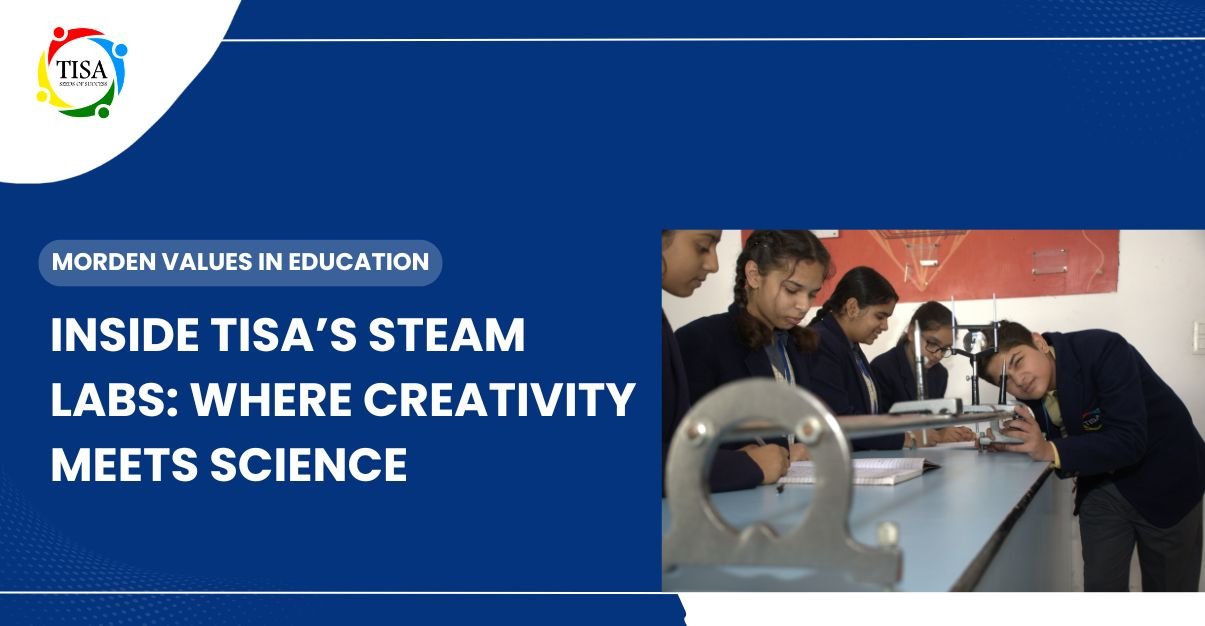
Confidence grows when children see their ideas work. It helps boost their self-esteem and belief in their capabilities. In TISA’s classrooms, every project becomes a chance to try, fail, learn, and try again. It is all thanks to the STEAM approach. It also teaches how failure is not the end of everything, but just another learning opportunity. This safe experimentation builds emotional strength.

A recent education study found that students experience greater confidence and a deeper understanding when teachers use STEAM-based methods. The reason is simple. They no longer learn as passive listeners. Instead, they create, explore, and shape ideas. Getting engaged in the learning sessions helps them better understand the subject and topic.
Additionally, hands-on STEAM activities help children understand that mistakes are part of the learning process. Once they accept this, they stop fearing failure. They become more willing to participate, ask questions, and take on responsibilities.
The Impact of STEAM on Early Childhood Learning
The idea behind STEAM is that it turns even basic activities into meaningful experiences. Early childhood development experts believe that young learners benefit most from sensory and hands-on tasks. Therefore, when children work on STEAM activities, they naturally develop:
- Better inquiry skills
- A stronger sense of exploration
- Problem-solving habits
- Improved decision-making
- Higher emotional confidence
Several studies show that STEAM exposure in early years helps improve critical thinking, problem-solving, and social skills. It benefits children even long after they leave the classroom.
Hence, introducing STEAM at the right age helps children build a solid foundation for future learning.
STEAM Helps Children Think Real-World
You may like to know that STEAM brings real-world logic into the classroom. Children learn how to apply ideas rather than just memorise them. Now, this approach prepares them for careers that require innovation and problem-solving.

One research project found that STEAM helps students improve both mathematical and digital competencies. This means STEAM benefits every child, regardless of background.
Furthermore, connecting subjects helps children understand why they are learning something. When they see how science works with art or how mathematics shapes engineering, their interest grows naturally. STEAM provides students with reasons to continue learning. It paints a picture for them regarding how everything is connected.
The Importance Of Teachers In STEAM Education
While digital tools and labs help, teachers are the heart of the STEAM education. Many experts agree that STEAM works best when educators receive proper training. They need to guide students through open-ended tasks, creative challenges, and collaborative projects.
Recent reviews highlight that STEAM-based professional development for teachers significantly improves student outcomes.
Therefore, at TISA, we invest extensively in acquiring top-grade STEAM-trained educators who provide students with a more substantial, more sustainable learning experience.
Why Parents Love STEAM
Parents across India and around the world appreciate the balance STEAM provides. So far, you can see that it focuses on academic strength, emotional intelligence, creative expression, and technological readiness. So, your child receives a complete, balanced, and future-ready education.
STEAM also encourages children to express themselves freely. It is one of the reasons that children discover hidden talents in art, music, design, robotics, storytelling, or scientific exploration. This discovery boosts their confidence and helps them develop a more profound love of learning.
Additionally, STEAM strengthens discipline. When children work on tasks that excite them, they naturally become more responsible with their time and effort. These habits help them throughout life. Imagine your child jolting out of the routine and schedule because they are having fun learning at school. That’s what we aim to achieve through STEAM education at TISA.
How STEAM Shapes the Future of Learning
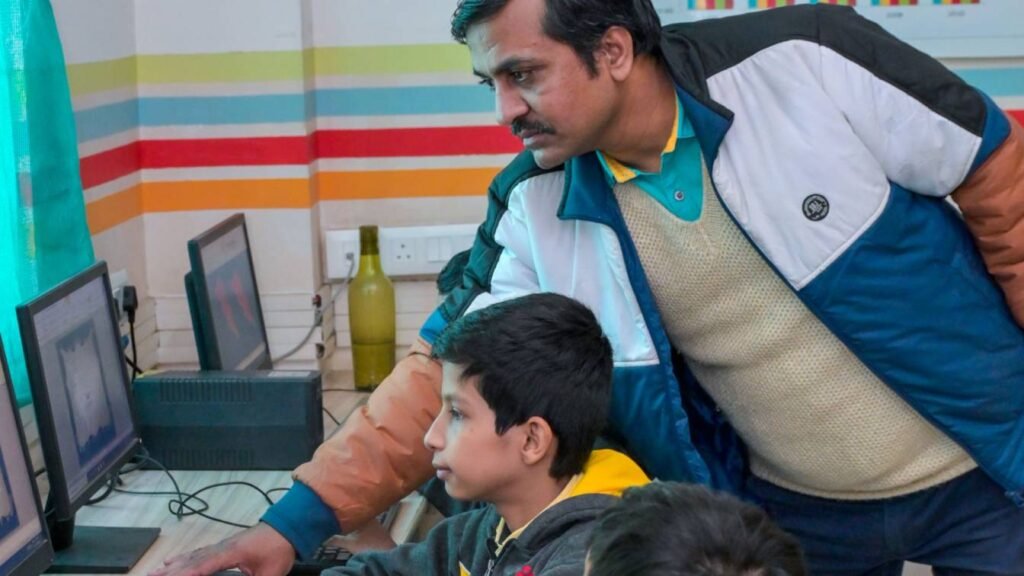
We hope that you now understand how STEAM could continue to shape future classrooms. Schools like TISA (THE INTERNATIONAL SCHOOL AGRA) that adopt STEAM early help their students become more adaptable, creative, and skilled.
As the world continues to move toward automation and innovation, children must learn how to think, not just what to know. Hence, STEAM opens the door to a future where children grow into creators, innovators, designers, and leaders. This approach helps them build careers that connect science, art, and technology. And that’s what we need, for our children to think freely and choose their path without fear of the rising technologies or competition.